
Engineering Precision: Designing Tooling for Million-Cycle Longevity
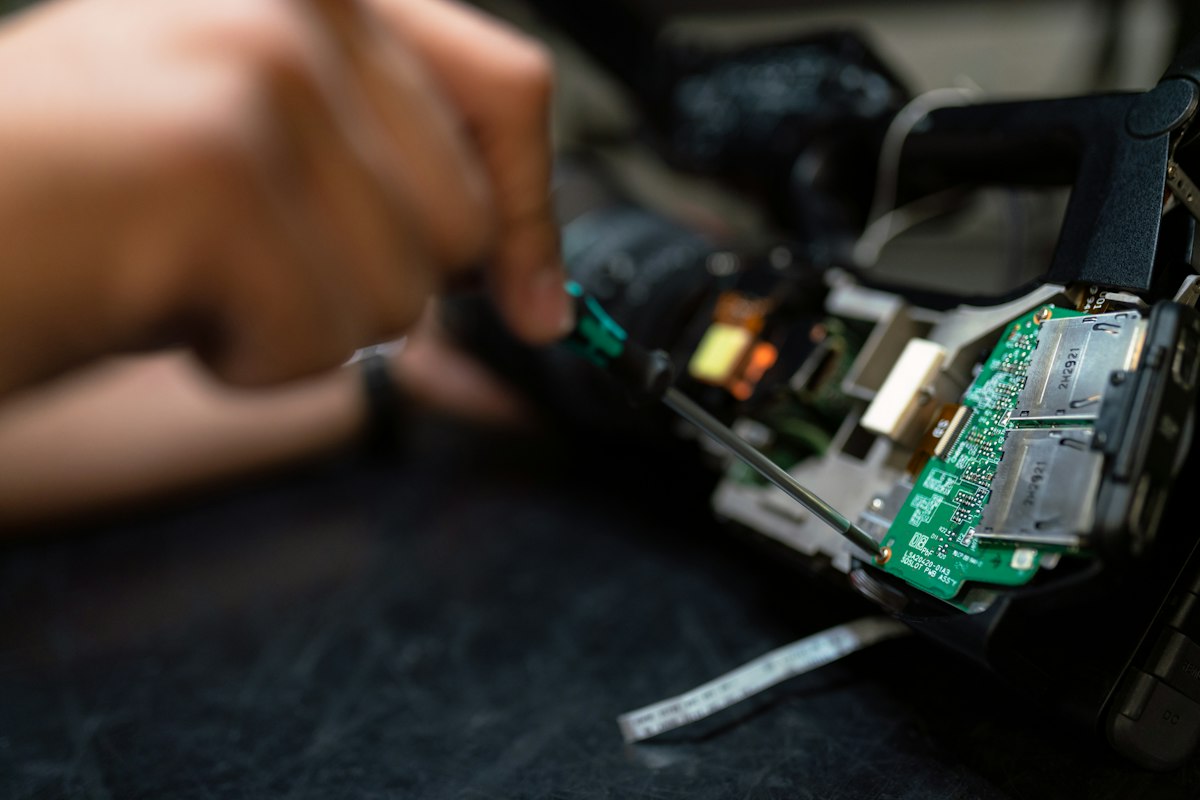
In the high-stakes world of UK manufacturing, downtime is the ultimate enemy of efficiency. Whether you are operating in the automotive, aerospace, or defence sectors, the physical connection between your automation and the component is often the weakest link. Designing tooling and fixtures capable of surviving a million-cycle production run requires more than just CAD proficiency; it demands an intimate understanding of material science, mechanical stress, and the nuances of robotic kinematics. At Neuteq, we see how even the smallest design oversight can lead to premature failure in high-volume environments.
The Anatomy of Durability: Material Selection
The foundation of any long-lasting fixture lies in the choice of materials. When you are aiming for a million cycles, standard off-the-shelf mild steels often fail due to material fatigue, abrasive wear, or oxidation. We prioritise advanced alloy steels or surface-treated aluminiums that offer the perfect balance between weight—to minimise robotic inertia—and hardness. For contact surfaces, the integration of hardened inserts is vital. By treating the fixture as a modular assembly rather than a monolithic block, you allow for the replacement of high-wear touchpoints without the need to scrap the entire system. This strategy not only extends the lifecycle of the tooling but also reduces the long-term cost of ownership for your automation cell.
Mitigating Mechanical Stress and Harmonic Fatigue
A fixture might look robust on screen, but real-world performance is dictated by how it handles repetitive stress cycles. Every time a robot engages with a part, it introduces dynamic forces. Over hundreds of thousands of cycles, these forces can manifest as microscopic cracks in welds or bolt loosening. ### Implementing Fatigue-Resistant Design Practices To combat this, we utilise finite element analysis (FEA) to identify stress concentrations early in the design phase. By implementing generous fillets instead of sharp corners and carefully selecting fastener grades, we can significantly shift the fatigue curve in our favour. Furthermore, incorporating vibration dampening and precise kinematic locating ensures that the fixture isn't just surviving the process, but actively maintaining accuracy despite the relentless repetition of a high-speed production line.
Designing for Repeatability and Easy Maintenance
Even the most robust fixture will eventually require inspection or maintenance. A design that lasts a million cycles is worthless if it takes an entire shift to calibrate or repair. Neuteq’s approach to high-volume manufacturing focuses on 'design for maintenance.' We incorporate error-proofing (poka-yoke) features that prevent misaligned parts, protecting both the product and the fixture from damage. Furthermore, utilising kinematic mounts allows for rapid tool changes that maintain sub-micron repeatability. This modular approach means that when a contact point finally hits that million-cycle fatigue limit, your maintenance team can swap out the modular insert in minutes, keeping the production line moving with minimal disruption to your throughput.
The Neuteq Advantage in UK Automation
Designing for longevity is at the heart of what we do at Neuteq. We understand that in sectors like aerospace and defence, failure is not an option. By combining our expertise in vision systems and robotic integration with precision fixture engineering, we provide turnkey solutions that are built to endure. Your production line is an investment, and the tooling that drives it should be built to match the longevity of the automation itself. If you are looking to optimise your next production run or need to overhaul a fixture design that is currently failing prematurely, get in touch with our team in Tamworth today. Let’s build your next million-cycle solution together.